
Supported by CINI – TATA TRust
Reporting Period : April 2024 – March 2025
Location :Dhalbhumgarh Block, East Singhbhum District
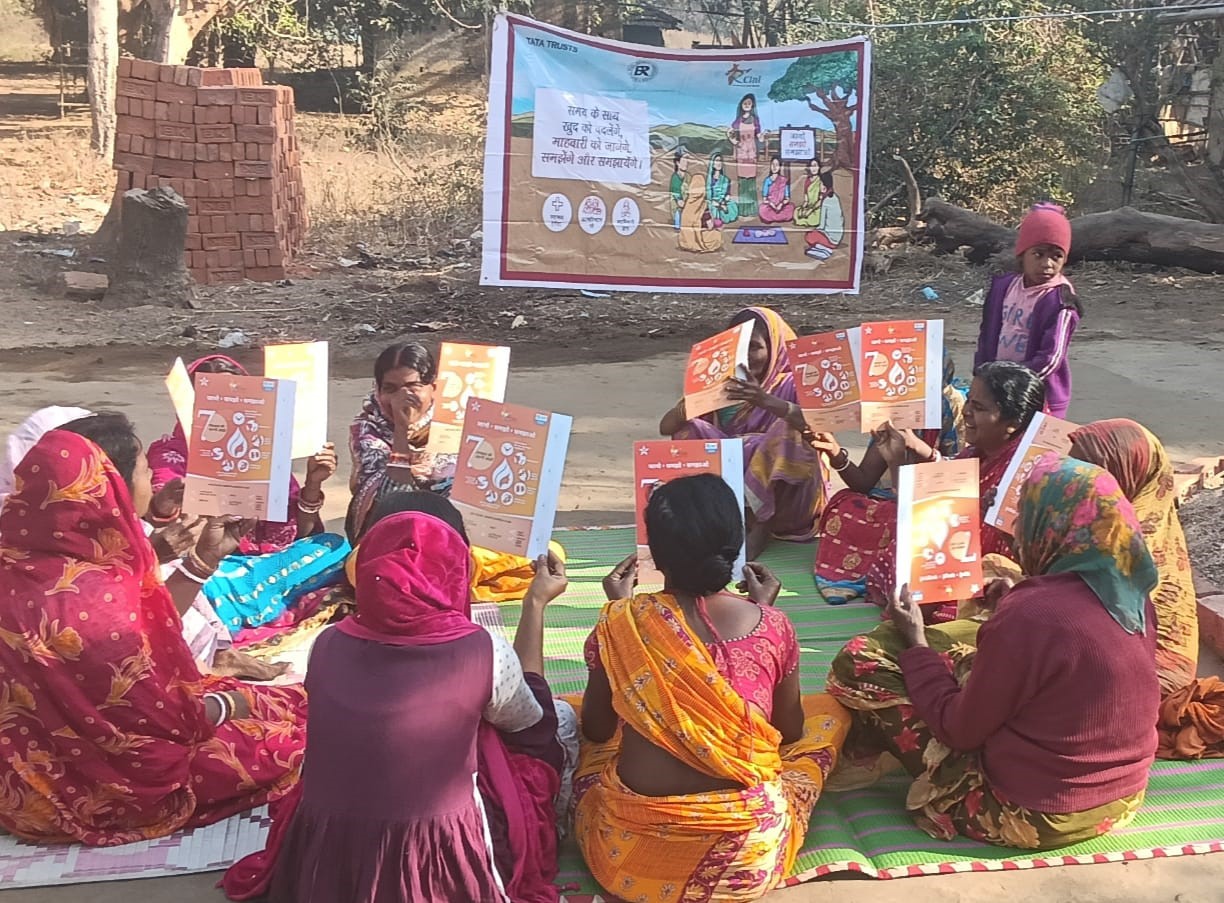
Project Synopsis: Menstrual Hygiene Management (MHM) in East Singhbhum, Jharkhand
Background and Rationale
Menstruation is a natural biological and physiological process experienced by girls and women across the globe. However, in India, it is still shrouded in stigma, shame, and misinformation. Despite the growing dialogue on women’s health and rights, menstrual hygiene management (MHM) continues to be a neglected issue, particularly in rural and tribal communities.
A 2016 national study revealed that 52% of menstruating women were unaware of safe menstrual hygiene practices before menarche (the first period). Alarmingly, more than 45% of women did not consider menstruation to be a normal biological process, illustrating the deep-rooted taboos and cultural barriers surrounding this subject. These figures point to a systemic lack of awareness, information, and support mechanisms for young girls as they enter puberty.
Project Objective
This intervention, led by CInI, aims to enhance the health, dignity, and wellbeing of rural and tribal women and adolescent girls in the East Singhbhum district of Jharkhand through focused engagement on Menstrual Hygiene Management (MHM). The primary objectives include:
- Raising awareness among adolescent girls and women about menstruation and its biological significance.
- Promoting the use of hygienic products and safe menstrual practices.
- Creating safe spaces for open dialogue to dismantle taboos and myths.
- Building community-based support systems, including peer educators and trained resource persons.
- Encouraging local production and access to affordable sanitary materials.
- Engaging families and communities to foster a supportive environment for girls and women.
Conclusion
Breaking the taboo around menstruation is not just a health initiative—it is a step toward empowerment, equity, and dignity for women and girls. By addressing menstrual hygiene through education, community participation, and access to products, this intervention seeks to build a healthier, more inclusive future for tribal and rural women of East Singhbhum.
Case Study
Case Study: From Silence to Strength – The Menstrual Health Journey of Salma Murmu
My name is Salma Murmu, and I live in Bagula village under Junboni Panchayat. There are four members in my family, and I am an active member of the Bhola Baba Mahila Samiti, a local women’s self-help group in my village.
For a long time, I had little understanding about menstruation and menstrual hygiene. Like many women in my village, I grew up surrounded by deep-rooted superstitions and cultural restrictions related to menstruation. We were told that when a woman is menstruating, she becomes impure. Touching holy objects, entering prayer rooms, or even handling food during that time was considered wrong. I too believed these things because no one had ever taught us otherwise. I used to fear that something bad might happen to my family or home if I broke any of these rules.
But all of that began to change when the women facilitators from RDA (Rural Development Association) came to our village. They conducted four training sessions on Menstrual Hygiene Management (MHM) using four different modules. Each session provided valuable knowledge and helped clear many of our doubts and fears. The Didis explained that menstrual blood is not impure. It is a natural process, an important part of the reproductive system, and essential for creating life. They told us that society had created these taboos over time due to a lack of proper education and awareness.
Hearing these facts made me realize how much we had misunderstood our own bodies. I now understand that touching plants, entering temples, or doing household work during menstruation does not bring any harm or impurity. I tested these beliefs myself—I touched plants during my period, I participated in worship, and nothing bad happened. That gave me confidence to let go of the shame I had always felt.
Before the training, I used to manage my periods by using old cloth. After use, I would wash the cloth and hide it under another cloth to dry because I was too ashamed for others to see it. But RDA Didis explained to us that if menstrual cloth is not dried properly in sunlight, it can develop bacteria and cause infections. Since then, I have been drying my menstrual cloths openly in the sun, without fear or embarrassment.
Another important thing I learned was about nutrition during menstruation. I used to feel very weak during my periods, but I never thought it had anything to do with food. The training taught us that women lose blood during menstruation and need balanced, iron-rich, and nutritious food. Now, I make sure to prepare meals with three colors—green vegetables, pulses, and grains—every day. I have even started a small garden near my home to grow leafy greens and vegetables to make this easier.
Today, I feel stronger, healthier, and more confident. I no longer feel weak during menstruation, and I am proud to share this knowledge with other women in my family and community. I now believe that menstruation is not something to hide or be ashamed of—it’s something to understand, accept, and talk about openly.
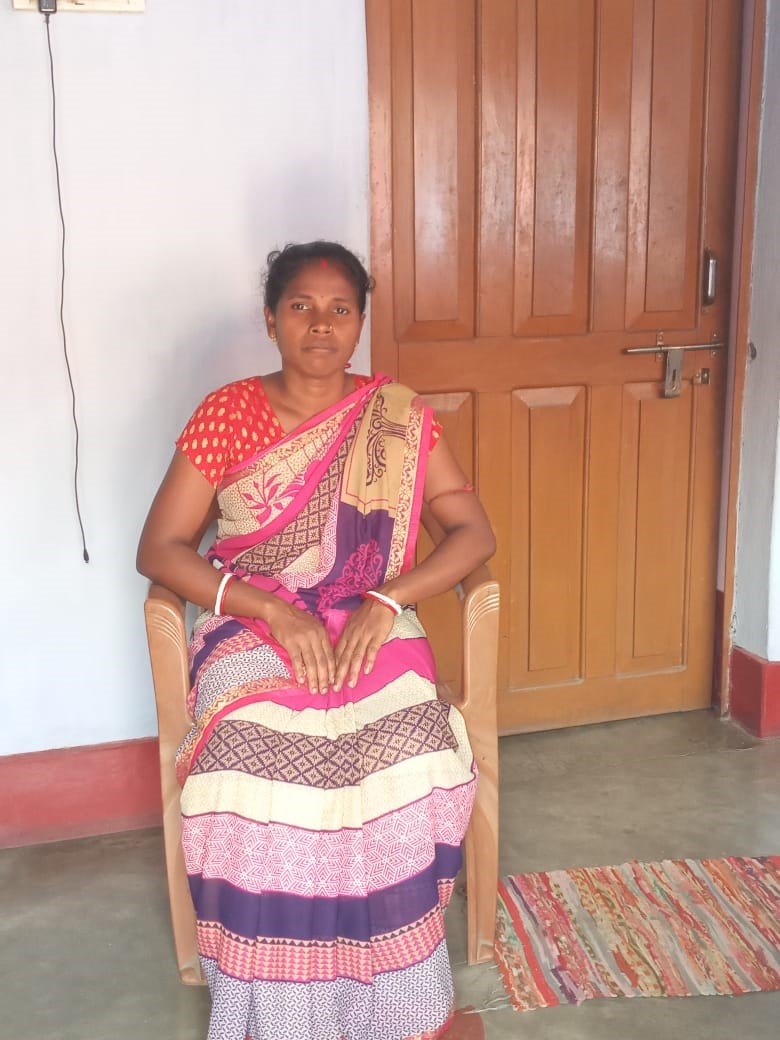
Salma Murmu